
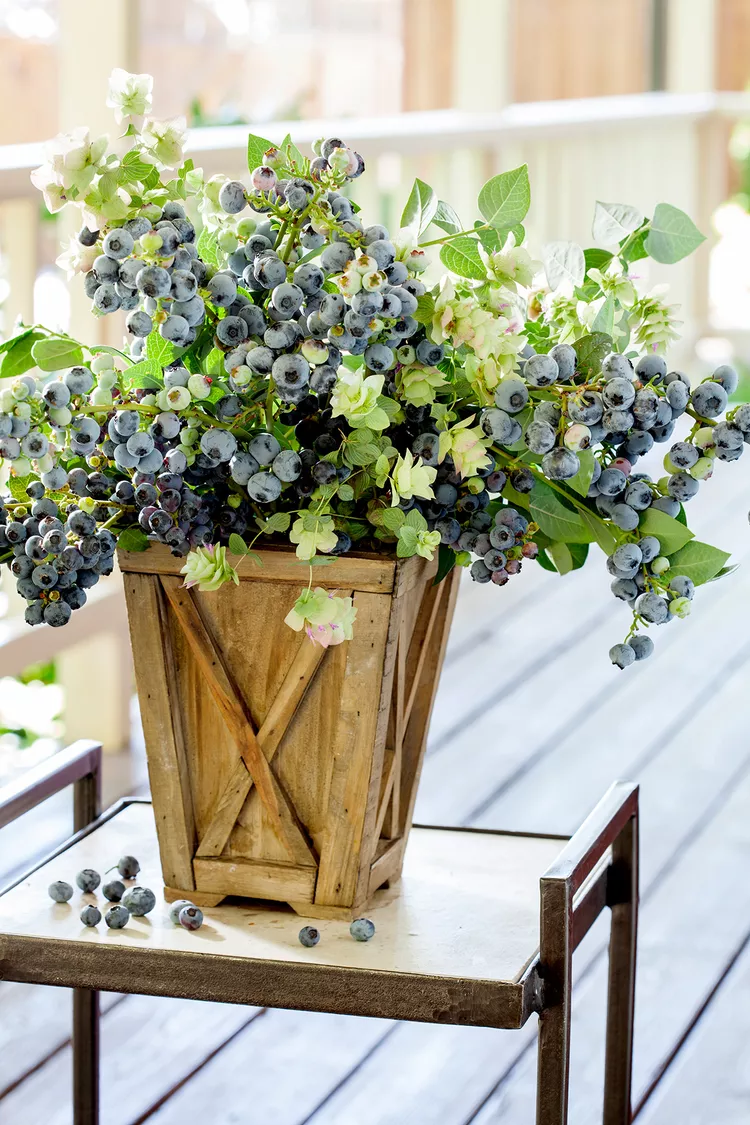
Growing blueberries in containers has several advantages over growing them in the ground. For example, you can place your containers where they get lots of sun during the growing season and move them in the fall to a site where the plants are protected from drying winter winds. You can also provide the perfect soil for your acid-loving blueberries more easily in a container than in the ground where the native soil may be less than ideal. Follow these tips on successfully growing blueberries in containers to get the most out of your plants.
1. Plant More Than One
Bees are necessary to pollinate blueberry flowers so that the fruit develops. Good cross pollination maximizes fruit production and this is best achieved when you plant at least two or three plants, each one a different variety. It’s very important that your varieties bloom at the same time so the bees can visit when the flowers are ready to be pollinated. For best results, place your container gardens within a few feet of each other.
2. Choose the Right Containers
Plant just one blueberry per large weather-proof container with good drainage. It should be about 20 to 24 inches deep and 24 to 30 inches wide to accommodate the plant’s root system. A half whiskey barrel with good drainage holes is ideal. If you plan to move the plants to a protected location for winter, you may want to go with something lighter weight such as plastic or resin containers. And consider investing in a plant dolly.
If you’re growing edible plants on a flat surface such as a patio or driveway, place the containers on bricks or pot feet to make sure excess water can escape through the drainage holes.
3. Prepare the Perfect Soil
Blueberries need acidic soil to thrive, ideally with a pH between 4.5 and 5.0. They also need one that is moisture retentive but drains well. Here are three options for your container mix:
- One part good quality potting soil and one part sphagnum peat moss
- One part sphagnum peat moss and one part of shredded pine bark
- Two parts coir (shredded coconut husks), two parts sphagnum peat moss, and one part perlite
Whichever recipe you use, mix the ingredients well and moisten it. Tease the roots of your blueberry apart to encourage their spread and place it in the container that is partly filled with your growing mix. Add more of your mix, being careful that the plant sits at the same depth it was growing in its nursery container. Water well.
4. Select a Sunny Site
Blueberries are most productive if they grow in full sun (at least 6 to 8 hours of direct sun per day). In regions with very warm summers, they will appreciate a bit of afternoon shade. Although these berry-producing plants will grow in part shade, they will bear much less fruit.
If the spot where you are growing your berries is exposed to wind, you may need to move them to a protected spot in late fall because plants can be desiccated by winter winds. If moving them is not a possibility, you can protect them by wrapping them loosely with burlap.
5. Fertilize with an Acidic Fertilizer
Use a fertilizer formulated for acid-loving plants. This will help maintain the ideal pH in the soil. Avoid fertilizers that contain nitrates or chlorides. Apply in early spring before the leaves expand according to the label directions.
6. Water Deeply and Regularly
Blueberries hate to dry out, so it’s important to water them regularly. The soil should be kept evenly moist. This may mean you need to check on these berry-producing plants several times a week, especially during the heat of summer. But don't overwater them or their roots may rot in constantly soggy soil. Be sure your containers have good drainage.
Mulching the surface of your container with an organic mulch such as pine needles or shredded bark will help prevent evaporation and maintain more even soil moisture.
7. Protect Fruit with Bird Netting
Although you won’t be harvesting for the first year or two, by the third year your blueberries should produce a decent crop. But as the berries begin to ripen, your local bird population will take notice. Birds love blueberries! To prevent their feasting on your long-awaited crop, cover each shrub with bird netting or a light floating row cover before the berries ripen. While this is a bit of a nuisance when you want to gather your berries for a dessert, it’s the best way to ensure there will, in fact, be berries to harvest. Once the harvest season is over, remove the netting or cover and put it away until next year.
8. Prune in Late Winter or Early Spring
After their third or fourth year in the container, your blueberries will probably need some pruning. This should be done before new growth begins. Using clean pruners, remove any dead and weak wood. Also remove branches that rub against each other or are awkwardly placed. You can remove up to a third of the plant without damaging it. This stimulates growth and opens the plant up to more sunlight and air circulation.